
What's the Best Macro Split?
MacroM8 Team
3 April 2026 · 3 min read
There is no universal "best" macro split
Type "best macro ratio" into any search engine and you'll find confident, conflicting answers. 40/30/30. High protein, low carb. Keto. Carnivore. The truth is that no single macro split is optimal for every person and every goal — but there are well-established ranges that work well for different objectives.
Here's how to find the right starting point for yours.
Understanding macro ratios
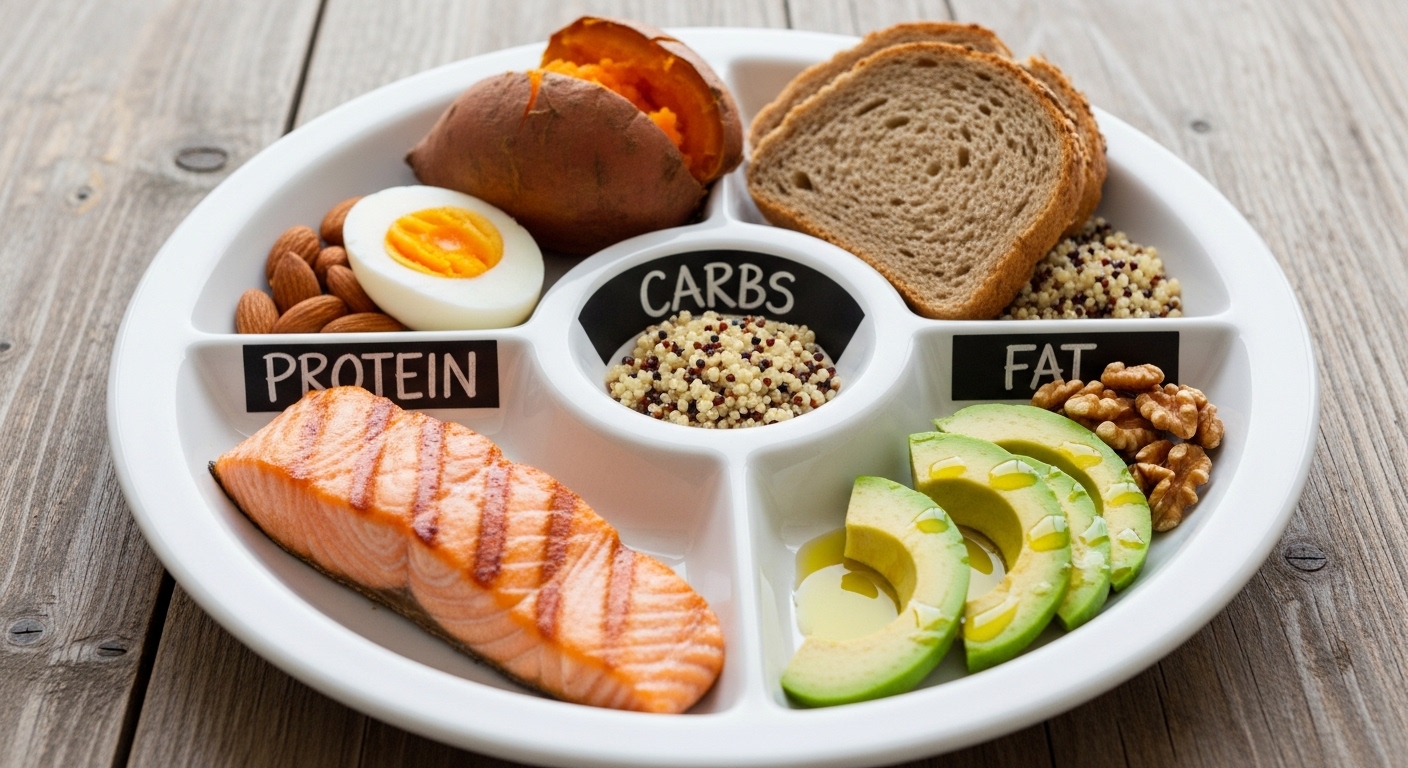
A macro split expresses your calorie intake as a percentage coming from each macronutrient:
Protein: 4 calories per gram
Carbohydrates: 4 calories per gram
Fat: 9 calories per gram
A 40/30/30 split means 40% of calories from carbs, 30% from protein, 30% from fat. It's a popular starting point, but not the best fit for everyone — particularly those with specific body composition goals.
Macro split for fat loss
During a fat loss phase, protein takes priority. Higher protein intake preserves muscle mass in a calorie deficit and keeps hunger under control. A typical fat loss macro split looks like:
Protein: 30–40% of calories
Carbohydrates: 30–45% of calories
Fat: 20–30% of calories
In absolute terms for an 80 kg person eating 2,200 calories, this translates to roughly 165–220g protein, 165–247g carbs, and 49–73g fat.
Macro split for muscle gain
Building muscle requires adequate protein, generous carbohydrates to fuel training and recovery, and sufficient fat for hormone health. A typical muscle gain split looks like:
Protein: 20–30% of calories
Carbohydrates: 45–55% of calories
Fat: 20–30% of calories
Note that the protein percentage is lower than in a fat loss phase — but in a calorie surplus, you're eating more food overall, so the absolute gram amount is still high.
Macro split for maintenance
Maintenance is about sustaining your current body composition while fuelling performance and health. The ranges are more flexible here:
Protein: 25–35% of calories
Carbohydrates: 35–50% of calories
Fat: 20–35% of calories
Why grams matter more than percentages
Macro ratios are a useful communication tool, but they can be misleading. A person eating 1,500 calories and a person eating 3,000 calories might both follow a 30% protein split — but one is eating 112g of protein while the other gets 225g. These are very different nutritional pictures.
This is why the best approach is to set macros in grams based on your body weight and goals first, and let the percentage ratio be whatever it works out to be — rather than starting with a ratio and working backwards.
How to find your personal starting point
Calculate your TDEE (total daily energy expenditure)
Adjust for your goal (deficit for fat loss, surplus for muscle gain)
Set protein in grams: 1.6–2.4g × your body weight in kg
Set fat in grams: 0.8–1.2g × your body weight in kg
Fill remaining calories with carbohydrates
Track for three weeks, then adjust based on results
Macro M8 handles all of this automatically — enter your details and goals, and you'll have a personalised starting point in under two minutes.