

How to Set Your Macros for Fat Loss (Without Losing Muscle)
MacroM8 Team
3 April 2026 · 4 min read
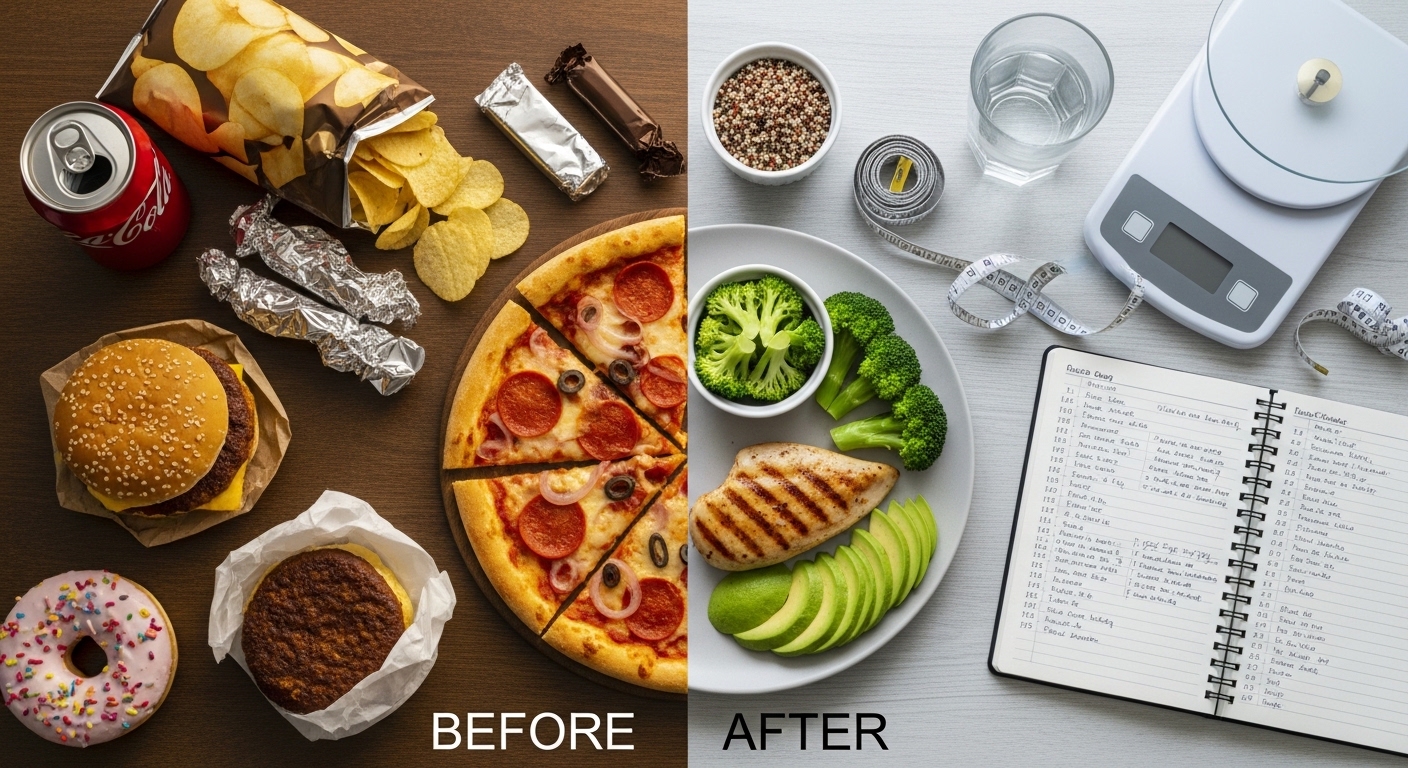
Fat loss is simple — but not easy
To lose body fat, you need to eat fewer calories than you burn. That's the non-negotiable foundation. But how you split those calories across protein, carbohydrates and fat determines whether you lose fat alongside muscle, or fat alone. The difference matters enormously — both for how you look and how sustainable the process feels.
Step 1: Set your calorie deficit first
Before touching macros, establish your calorie target. A deficit of 300–500 calories per day below your TDEE is the sweet spot for most people — aggressive enough to produce visible progress, conservative enough to preserve muscle and keep hunger manageable.
Avoid the temptation to slash calories dramatically. Very low calorie diets accelerate muscle loss, tank energy levels, spike hunger hormones, and are notoriously difficult to sustain. Slow and steady wins this race.
Step 2: Set protein — your highest priority macro
Protein is the most important macro during a fat loss phase, for two reasons. First, it's the primary driver of muscle preservation — eating enough protein signals your body to hold onto lean tissue even when calories are low. Second, protein is the most satiating macronutrient, meaning it keeps you fuller for longer.
Target: 1.8–2.4g of protein per kg of body weight per day.
For an 80 kg person, that's 144–192g of protein daily. If you're in a significant deficit or training hard, aim for the higher end of that range.
Step 3: Set fat — your floor, not your ceiling
Dietary fat is essential for hormone production, joint health, and fat-soluble vitamin absorption. During a fat loss phase, you don't want to eliminate fat — you want to set a minimum floor and work from there.
Target: 0.8–1.2g of fat per kg of body weight, or roughly 20–30% of total calories.
Going below 20% of calories from fat for extended periods can disrupt testosterone and oestrogen levels, impair recovery, and make food feel unsatisfying.
Step 4: Fill the rest with carbohydrates
Once you've set protein and fat, carbohydrates fill the remaining calories. Carbs are your body's preferred fuel source for exercise, and keeping them reasonably high supports training performance and mental energy during a deficit.
The exact carb amount will depend on your calorie target, protein and fat grams — but for most people, carbs end up representing 30–50% of total calories during a fat loss phase.
A worked example
Let's say you're an 80 kg person with a TDEE of 2,600 calories. You set a 400-calorie deficit, giving you a daily target of 2,200 calories.
Protein: 160g × 4 kcal = 640 calories
Fat: 70g × 9 kcal = 630 calories
Carbs: 2,200 − 640 − 630 = 930 ÷ 4 = 232g carbohydrates
Final split: approximately 160P / 232C / 70F at 2,200 calories.
Practical tips for hitting fat loss macros
Prioritise protein at every meal — it's the hardest macro to hit and the most important
Build meals around a protein source first, then add carbs and fat to fill your targets
Don't fear carbs — they support training and mood, which affects adherence
Use a tracking app to build awareness of what you're actually eating vs what you think you're eating
Be consistent, not perfect — hitting your macros 80–90% of the time will deliver results
Start tracking with Macro M8
Setting up your fat loss macros takes five minutes with Macro M8. Enter your stats, choose your goal, and get a personalised macro target you can start using today. Track your meals, monitor your progress, and adjust when needed — all in one place.